Strategic Planning and MEL System Design
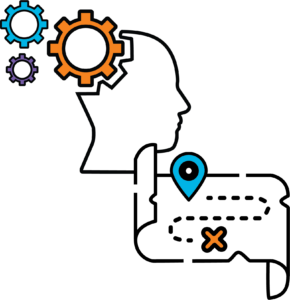
At Lucid Collaborative, strategic planning is built on adaptive management — a flexible, learning-centered approach that treats social change as complex, non-linear, and rarely predictable.
Central to our approach is Outcome Mapping: rather than simply tracking outputs and indicators, we focus on how people – their actions, practices, and relationships – actually change in pursuit of an organization’s mission. We work with clients to define clear outcomes, identify who they can realistically influence — such as community members, government officials, administrators, students — and design strategies that drive meaningful behavior change among those actors.
Our strategic planning process spans three areas: mapping theories of change and clarifying pathways from activities to outcomes; monitoring progress through streamlined indicators and data-collection tools; and managing learning, reflection, and reporting to keep organizations adaptive and on track.
The result is a strategic framework that goes beyond a static mission statement and results matrix — working instead as a living tool that builds evaluative thinking into daily operations, strengthens accountability to donors and partners, and keeps the voices of affected communities at the center.
Evaluations and Applied Research
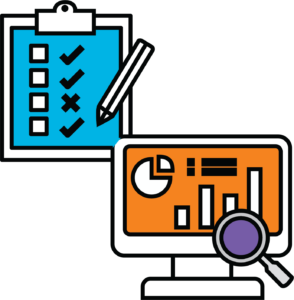
Lucid Collaborative brings a rigorous, utilization-focused approach to evaluation and applied research. We design evaluations that go beyond measuring outputs to assess the quality and depth of change — examining how interventions shift practices, relationships, and power dynamics among the people and communities at the heart of any project or intervention.
Our methods are participatory and complexity-aware, drawing on mixed-method data collection to capture both quantitative results and the lived experiences of those most affected. We apply a rights-based lens throughout, ensuring that the voices of marginalized and vulnerable populations are meaningfully reflected in findings and recommendations.
Whether conducting baseline assessments, needs assessments, developmental evaluations, or summative evaluations, we tailor our approach to the context — remaining flexible and adaptive as conditions evolve. Our goal is not simply to produce reports but to generate actionable knowledge that strengthens programming, informs decision-making, and supports accountability to stakeholders.